

Explore the Latest in Global Fraud Intelligence
Fraudsters follow opportunity, and people remain one of the most vulnerable links in the chain. In 2025, we saw social engineering and coercion pose an increasing threat to identity verification, especially during the onboarding process.

The Changing Face of Fraud
Identity fraud has entered a new phase—defined by scale, automation, and AI-driven sophistication. Analysis of more than 1 billion identity verification events across 195 countries and 30+ industries shows that fraud is no longer opportunistic; it is now industrialized, global, and commercially optimized.
Identity fraud in 2026 is faster, smarter, and more profitable than ever before. And it’s no longer just a security concern—it is a direct driver of financial loss, operational risk, and customer trust erosion. Organizations that treat identity as a continuous, business-critical control point—rather than a one-time verification step—will be best positioned to reduce financial loss, protect customer trust, and sustain digital growth.
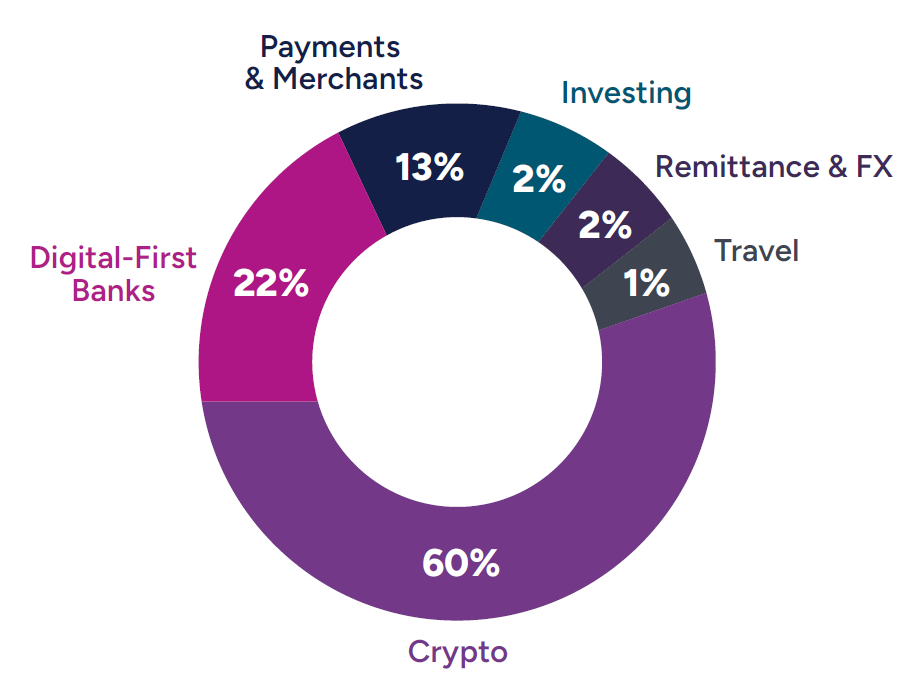
Deepfake attacks are especially prevalent in high-risk financial services.
Fraud Has Become a Scalable, AI-Powered Business
Identity fraud statistics show that fraudsters are leveraging generative AI, automation tools, and “fraud-as-a-service” ecosystems to operate with enterprise-level efficiency. These capabilities enable attackers to scale in both volume and sophistication, creating continuous pressure on financial margins and fraud-loss exposure.
- Deepfakes now account for 1 in 5 biometric fraud attempts, making AI-generated impersonation a mainstream threat.
- Injection attacks surged 40% year-over-year, as attackers attempt to bypass traditional verification systems entirely.
- Deepfaked selfie attempts increased 58% in one year, demonstrating rapid adoption of AI tooling.
These techniques are often the primary engines of account takeover (ATO) as well, as attackers no longer need stolen passwords when they can impersonate the account holder through AI-generated biometrics or bypass verification systems via injection attacks.
Identity Fraud Targets “Moments of Truth” in the Customer Lifecycle
Fraudsters are strategically aligning their attacks to maximize financial return, targeting different stages of the identity lifecycle based on business model:
of fraud in crypto occurs during onboarding, driven by sign-up incentives and rapid account creation.
of fraud targeting payments occurs at authentication, reflecting the value of hijacking active accounts.
of fraud in digital banks is tied to account takeover (ATO), prioritizing long-term account exploitation (such as high-value transactions or new device enrollment).

Human Vulnerability Remains Fraud's Weakest Link
Despite technical innovation, fraud success still heavily depends on exploiting human trust. Even the highest preventative, best-in-class technology cannot fully mitigate fraud risk without user-aware, behavior-aware, and context-aware controls.
- Social engineering, phishing, and coercion are rising, often convincing victims to use their own legitimate credentials
- Fraudsters are increasingly targeting people, systems, and identity elements simultaneously, creating multi-layered attack vectors
Identity Theft Trends: Continuous, Global, and Organized
The data indicates that fraud is no longer isolated or regional and must evolve from reactive controls to intelligent-driven risk management.
- Activity spans 195 countries, with consistent global patterns
- Fraud operations run continuously, exploiting off-hours and operational gaps
- Attackers reuse identities, credentials, and patterns—indicating coordinated fraud networks, not individuals
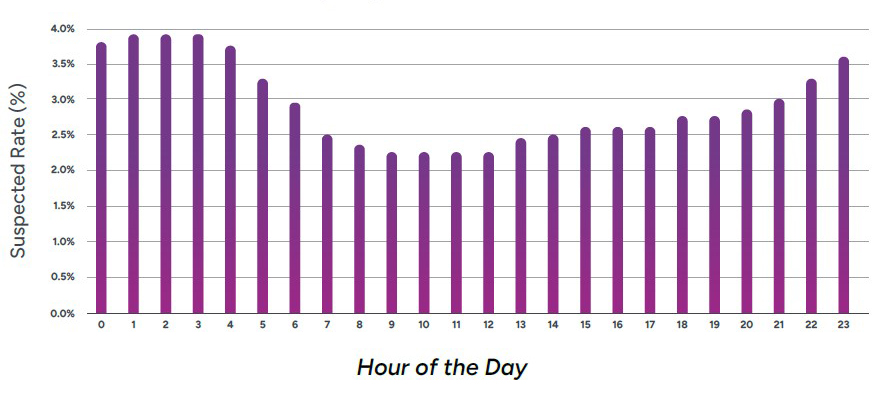
Fraud has become a 24/7 business. Entrust data shows that fraud attempts peak between 2 and 4 am UTC.

What once required specialized software and design skills can now be achieved with an open-source model and a few prompts.
Strategic Implications for Business Leaders

Move to Lifecycle Identity Protection:
Point solutions (e.g., onboarding-only verification) leave critical gaps. Organizations must secure identity across onboarding, authentication, and ongoing usage

Invest in AI-Resilient Defenses:
As attackers adopt AI, organizations must deploy tools such as liveness detection and biometric verification, injection attack prevention, and behavioral and device intelligence

Align Fraud Prevention to Business Risk:
Fraud mitigation should map directly to revenue exposure and customer lifetime value, ensuring controls are strongest where financial impact is greatest.
FAQs
What are the latest identity fraud statistics?
Entrust's Identity Fraud Report analyzes over 1 billion identity verifications across 195 countries and 30+ industries 1 to reveal how fraud continues to grow in scale and sophistication. Key findings for 2026 include:
- Deepfakes account for one in five biometric fraud attempts
- Instances of deepfake selfies increased by 58% in 2025
- Injection attacks surged 40% year-over-year.
Generative AI is fueling both the volume and sophistication of attacks targeting people, credentials, and systems.
What is an injection attack and how common is it?
Injection attacks enable fraudsters to bypass live capture processes by feeding manipulated images or videos directly into verification systems. According to the Entrust 2026 Identity Fraud Report, injection attacks surged 40% year-over-year. When combined with deepfakes, these sophisticated techniques can convincingly mimic users and live capture experiences, making detection difficult without robust, multi-layered fraud prevention.
What is account takeover (ATO) fraud?
Account takeover fraud involves hijacking existing user accounts, typically through stolen credentials, phishing, malware, or social engineering, to steal funds or harvest sensitive data. ATO is most common in industries where accounts hold long-term value — particularly payments and digital-first banks. To defend against ATO, organizations should leverage biometric authentication to tie every login back to the original trusted identity.
Why is account takeover (ATO) still so difficult to prevent?
ATO has evolved beyond stolen credentials. Today, attackers use AI-generated biometrics and social engineering to impersonate legitimate users or trick them into granting access. As a result, ATO now represents a significant share of fraud—55% in digital banking—and often occurs during authentication, where 82% of payment-related fraud is concentrated. Preventing ATO requires continuous identity verification, not just login security.
How can businesses prevent identity fraud?
Effective fraud prevention requires a layered, identity-centric approach. The future of digital trust lies in layered, identity-centric strategies powered by AI, delivering fraud prevention and seamless user experiences. Combining AI-driven identity verification, biometric liveness detection, risk-based authentication, and continuous monitoring across the customer lifecycle is critical to staying ahead of adaptive threats.
Why is continuous identity verification critical for fraud prevention?
Fraud is no longer a one-time event—it’s continuous, coordinated, and global. Attackers reuse identities, operate across regions, and exploit gaps between systems and time zones. Treating identity as a continuous control point across the lifecycle—from onboarding through every transaction—helps organizations:
- Reduce fraud losses
- Detect suspicious behavior in real time
- Protect customer trust without adding unnecessary friction
Read the full report to discover more identity fraud statistics, strategies, and business approaches to fraud mitigation and prevention.